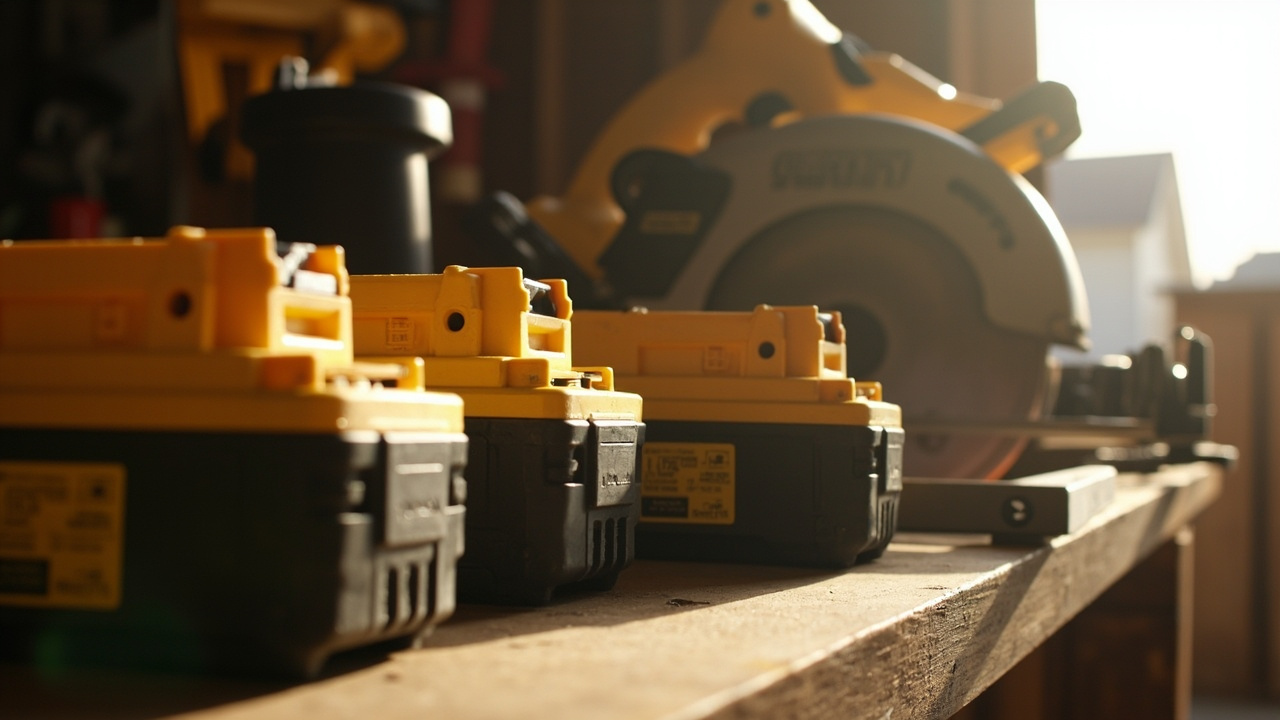
DeWalt took a different swing in 2016 when it launched FlexVolt, a battery that automatically switches between 20V and 60V depending on the tool it lands in. The pitch was elegant; the marketing hides a few math traps buyers tend to discover the hard way. MakeUseOf dug into the engineering and the practical trade-offs.
The short version: it's clever, but it's not free, and the labels can mislead.
What happened
- A FlexVolt pack contains 15 lithium-ion cells in three rows of five.
- Wired in parallel, the pack delivers 20V with three times the capacity of a single row.
- Wired in series, the same pack delivers 60V with the capacity of a single row.
- Tools determine voltage via slot shape; there's no manual switch.
- FlexVolt also pairs two packs to deliver 120V on bigger saws.
- Capacity is printed as amp-hours at 20V only and shrinks at 60V.
- Watt-hour ratings are the fair way to compare packs across voltages.
How we got here
Tool brands typically run multiple battery platforms in parallel. Each platform needs its own batteries and chargers, fragmenting the buyer's investment. DeWalt's FlexVolt tries to collapse several platforms into a single battery. The cell arrangement is the heart of the design, and the tool's slot shape decides how the cells connect.
Our analysis
The trick is sound electrical engineering. The cells are identical in every configuration; only the wiring between them changes. The slot shape on 60V tools physically nudges the contacts into series mode, while 20V tools and chargers leave them in parallel. That keeps users from accidentally pushing 60V into a 20V drill—a real safety win.
The label game trips most buyers up. A 6Ah FlexVolt becomes a 2Ah battery in a 60V saw. The 15Ah monster drops to 5Ah. Watt-hours stay constant: multiply volts by amp-hours and you get 120Wh whether that's 20V at 6Ah or 60V at 2Ah. DeWalt prints watt-hours in small type on the pack—that's the number that matters.
The trade-offs are real. Extra cells mean extra weight, which throws compact drills off-balance. Plenty of owners end up with slim 20V packs on the drill and FlexVolt on the saws. Compatibility also runs one way: FlexVolt packs work in 20V tools, but regular 20V packs won't run 60V tools at all. That makes the 60V platform a bigger commitment than the label suggests.
Example: matching battery to job
Say you grab a 60V DeWalt circular saw as a bare tool. Your existing 20V packs won't fit the slot shape. You'll need at least one FlexVolt pack, plus a FlexVolt-compatible charger. If you already own a FlexVolt charger for a table saw, you're set on the charging side; otherwise, budget for that too.
Who should care
| Situation | Verdict |
|---|---|
| Already own 20V DeWalt and want 60V tools | Strong buy—FlexVolt works both ways |
| Starting fresh with only 60V tools | Expect higher upfront costs |
| Want one battery for drill and saw | FlexVolt delivers here |
| Drill-heavy user who rarely uses high-voltage tools | Stick with standard 20V packs |
| Cross-brand owner (Ryobi, Milwaukee, etc.) | FlexVolt won't help—platform is DeWalt-only |
What to watch next
Watch whether competing brands adopt a similar auto-switching pack. Most have stayed with separate platforms for now. Also watch the watt-hour spec, since that's the only number that survives the trip between voltages.
Key takeaways
- FlexVolt packs rewire themselves into 20V or 60V based on the tool slot.
- Amp-hour ratings change with voltage; watt-hours stay constant.
- Compatibility runs one way: FlexVolt fits 20V tools, but 20V batteries won't power 60V tools.
Frequently asked questions
How does a FlexVolt battery change voltage?
The pack's cells can be wired in parallel (20V) or in series (60V). The tool's slot shape selects which configuration is active.
What amp-hour rating does a FlexVolt pack actually deliver at 60V?
A 6Ah FlexVolt pack delivers 2Ah at 60V; a 9Ah delivers 3Ah; a 12Ah delivers 4Ah; a 15Ah delivers 5Ah.
Why is watt-hour rating the better number to compare?
Watt-hours stay constant across voltage settings, so it's the fair cross-platform comparison.
Will a 20V DeWalt battery run a 60V FlexVolt tool?
No. Regular 20V packs won't physically fit the 60V slot or supply the higher voltage.
How heavy is a FlexVolt battery?
They run heavier than standard 20V packs because of the larger cell count, which can unbalance compact drills.